Reframing Organizational Power: Integrating Shalom Into Raven’s Power/Interaction Model of Interpersonal Influence
Abstract
This paper introduces the integration of the theological concept of shalom into Raven’s Power/Interaction Model of Interpersonal Influence. The reframed model recasts the traditional power bases of legitimate, reward, coercive, expert, and referent as instruments of stewardship, justice, and relational integrity aligned with the principles of shalom. Rather than wielding power for personal gain or mere compliance, leaders are called to use authority as a service, expertise as shared wisdom, rewards to reinforce community-building behaviors, and even coercive power as a means of accountable justice. Influence tactics shift from impression management and control to vulnerability, authenticity, and empowering engagement with followers. Outcomes are evaluated not by subordinates’ obedience but by the flourishing of individuals, relationships, and communities. This integration extends existing power theory by infusing a faith-informed ethical dimension that prioritizes collective well-being over self-interest. It offers scholars and practitioners a framework for ethical leadership that aligns organizational power dynamics with a transcendent vision of peace and justice.
Keywords: Shalom, Ethical Leadership, Power Dynamics, Organizational Flourishing, Christian Perspective.
Introduction
“Power is elusive and coveted, enabling and despised. It speaks to the best and the worst of human nature, evoking strong visceral feelings in those who hold it and in those under its sway. The appropriate use of power is one of the most fundamental and contentious questions of the human condition” (Lingo & McGinn, 2020, p. 16). This tension between the good and bad use of power has existed since the beginning. God used omnipotent power in creating the universe. Adam and Eve were tempted by their desire to have the ultimate information power; to eat the fruit of the Tree of Knowledge of Good and Evil, and in so doing, be like God (English Standard Version Bible, 2001, Gen. 3:5). That desire for power proved to be mankind’s downfall, leading to the consequences of the Fall (Wolters, 2005). This includes the kingdom of God in an “already but not yet” state, one that is foretold in the Old Testament as the coming Messiah who will be called the Prince of Peace (Is. 9:6-7), fulfilled through Christ’s message of peace in the Gospel and will be fully redeemed upon His return (Titus 2:13-14)
Until then, plenty of opportunities exist to use power in destructive ways or reflect God’s nature. Organizationally, power has been abused individually and systematically (Keltner, 2016). Charismatic leaders use their personal power to pursue self-centered goals (DeCelles & Pfarrer, 2004), individuals wield scarcity, criticality, and uncertainty to get what they want (Salancik & Pfeffer, 1977) and systems are built around coercion and the threat of punishment (French & Raven, 1959). Research has shown that these practices, while seemingly valuable for the short term, lead to adverse long-term outcomes, such as tainted reputations, stifled team innovation, and reduced organizational performance (Keltner, 2016). At the same time, power has also been used by Christian business leaders to redeem individual and systemic brokenness in the pursuit of shalom. This was defined in the Old Testament as how things should be (Yoder, 1997), shown through flourishing in our relationships with God, ourselves, others, and creation (Sherman, 2022). In the pursuit of shalom, transformational leaders use their personal power to empower subordinates and build trust (Conger & Kanungo, 1994), individuals reimagine their power as a gift that requires accountability and vulnerability (Crouch, 2013); and social entrepreneurs seek to create social value and benefit society rather than wealth maximization (Muralidharan & Pathak, 2018). Models, including Raven’s Power/Interaction Model for Interpersonal Influence (1992), are used in the literature to help explain what kind of social power individuals will use to exert influence. This model first identifies the motivational factors for influence, assesses the available bases of power, prepares, chooses, and executes the influence attempt; it also finishes by determining the effects or outcomes (Elias, 2008). This model focuses on selecting the appropriate base of power (French & Raven, 1959) to achieve the desired outcome, which could be self-serving or other-focused. This paper examines how a Christian perspective on power and shalom can be integrated into Raven’s Power/Interaction Model of Interpersonal Influence to transform organizational power dynamics and create an environment where shalom is the desired outcome. To understand and address this question, this paper will review the research literature and biblical perspective on power, explore the concept of shalom, analyze each element of the Power/Interaction Model in light of shalom, and discuss the potential impact on current organizational practices.
Review of Literature
Evolution of Social Power Constructs
Power dynamics are integral to the functioning of any organization, influencing not only the success or failure of an organization, but also matters of justice and the quality of supervisor-subordinate relationships. This section will explore how power has been conceptualized in the literature, considering both self-serving and generative uses of power. The discussion will focus on the historical development of social power theories, the evolution of the bases of power, and the subsequent Power/Interaction Model proposed by Raven (1992).
History of Social Power Literature
Traditional theories of power have advocated for the pursuit of power at all costs, using fear of punishment and exploitation of human emotion to control others for one’s own purposes (Machiavelli, 1532). Nietzsche believed power is amoral, self-serving, reflected in all endeavors, public and private, and is a foundational drive for all beings (Hyde, 2010). Similarly, Kierkegaard believed that while individuals use intellectual, spiritual, emotional, and physical means to achieve desires and protect interests; control and direction require authority (Hyde, 2010). This was also reflected in Foucault’s juridical model, where power is possessed by a centralized source and used primarily in repressive ways (Christensen, 2023). Moving past revolutions and failed government experiments, and building on social power studies in the early 1950’s (Pelz, 1952)(Stogdill, 1950), Weber’s definition of power depicts the probability that a person can carry out their own will despite resistance (1947), and prominent scholars such as Lewin and Kelman (Elias, 2008) and French and Raven put forward a theory that defined social power as “potential influence; the ability of a person or group to induce or prevent change in another” (Raven, 1999, p. 162), with the original focus on supervisor-subordinate relationships.
Evolution of the Bases of Power
In French and Raven’s seminal work (1959), they initially identified five original types of social power: reward, coercive, legitimate, expert, and referent power. These categories were designed to improve understanding of how power operates within organizations and how agents use it to influence others. Legitimate power comes from a formal position or role. This can result from an organization’s hierarchy, delegated power from someone in authority, or it can be culturally derived. Reward power is based on the ability to provide positive incentives. The perception of the ability for the rewards to be administered determines the strength of the reward power. Over time, it can lead to increased referent power. Coercive power involves the threat of punishment with noncompliance. This power is strengthened based on the valence of the threatened punishment and the perceived ability to avoid the punishment through compliance. Expert power stems from an agent possessing specialized knowledge or skills. This power doesn’t typically extend outside of the specific area of expertise. Referent power arises from personal traits that lead others to identify with attributes such as admiration and respecting individuals. The stronger the identification, the stronger the referent power. Information power was initially conceived as a component of expert power, but was added by French and Raven in 1965 as a distinct power base. An agent using this type of power controls information or data dissemination. The list of power bases has grown to over 14 unique approaches, as indicated in Table 1 (Elias, 2008). Many theorists have sought to understand the bases of power, even as recently as 2022, where Pfeffer found that control over resources, social relationships, presence, and individual brand are all sources of power.
Table 1 – Powers Bases Typology
| Power Base | Influencing Factor | Theorist / Date |
|---|---|---|
| Reward | Promise of monetary incentive | French & Raven, 1959 |
| Coercive / Pressure | Promise or threat of punishment | French & Raven, 1959 |
| Expert | Level of expert knowledge | French & Raven, 1959 |
| Referent | Identification with the influencing agent | French & Raven, 1959 |
| Legitimate | Authority or right to make a request | French & Raven, 1959 |
| Information | Controlling knowledge or data | French & Raven, 1959; & Tracey, 1992 |
| Assertiveness | Demanding, ordering, and setting deadlines | Raven, 1965 |
| Political | Ability to cope with critical issues facing an organization | Salancik & Pfeffer, 1977 |
| Institutionalized | Enhancing power while reducing others’ power | Salancik & Pfeffer, 1977 |
| Ingratiation | Acting humble and giving sense of importance to the other person to inspire favorable feelings | Kipnis et al., 1980 |
| Rationality | Logical arguments and evidence | Kipnis et al., 1980; Yukl & Tracey, 1992 |
| Sanctions | Threats to job security and salary | Kipnis et al., 1980; Yukl & Tracey, 1992 |
| Upward Appeals | Appealing and obtaining support from higher-ups | Kipnis et al., 1980; Yukl & Tracey, 1992 |
| Blocking | Threats of slow-downs and work stoppages | Yukl & Tracey, 1992 |
| Exchange | Offers of exchange of positive benefits, reciprocation, or future benefits | Yukl & Tracey, 1992 |
| Coalitions | Obtaining support of coworkers and subordinates | Yukl & Tracey, 1992 |
| Inspirational Appeal | Appeal to values, ideals, aspirations, or confidence in abilities | Yukl & Tracey, 1992 |
| Consultation | Request for participation in planning task with openness to adjust based on concerns | Yukl & Tracey, 1992 |
| Personal Appeal | Appeal to personal relationship | Yukl & Tracey, 1992 |
| Resources | Using power, including more than people assume, perpetuates it | Yukl & Tracey, 1992 |
| Social Relationships | Building social relationships and pursuing networking | Pfeffer, 2022 |
| Presence | Using language and body language to appear powerful | Pfeffer, 2022 |
| Individual Brand | Standing out from the crowd builds credibility, connections, and power | Pfeffer, 2022 |
| Restrictive Control | Using organization’s power structure, implemented through legitimate power | Pfeffer, 2022 |
| Promotive Control | Providing opportunities for input and opinions from subordinates, implemented through referent and reward power | Elias, 2009 |
In 1998, Raven et al. revisited the power bases typology to further differentiate and extend understanding of the power bases from Raven’s 1992 model. They also developed the Interpersonal Power Inventory (IPI) to assess these bases of power attributed to agents in influencing situations. As part of their outcomes, they spelled out 11 more specific power bases and categorized them as either a harsh or a soft base of power. Controlling forms of legitimate or coercive power were defined as harsh tactics, while indirect and unobtrusive forms of power were considered soft tactics (Bui & Raven, 1994).
Not all the power bases connect to a top-down dynamic, but they all assume that power is “something possessed by someone while exercised over others” (Christensen, 2023, p. 1) or “having the discretion and the means to asymmetrically enforce one’s will over others” (Sturm, 2015, p. 139). Typically, an attempt at influence is directed towards someone using one or more power bases that can be embodied, endowed, or cultivated over time, (Sturm, 2015) and requires interdependence between the agent and the target (Karkoulian et al., 2009), but does not necessarily have to be related to someone’s position (Sturm, 2015).
For example, an informal type of power such as blocking would be used solely by subordinates through the threat of slowdowns and work stoppages, while sanctions would be used by a supervisor through threats to job security and salary (Yukl & Tracey, 1992).
Table 2 – Harsh and Soft Power Bases
| Power Base | Description | Harsh or Soft |
|---|---|---|
| Personal coercive power | Threat of disapproval for noncompliance | Harsh |
| Impersonal reward power | Promise of monetary incentive | Harsh |
| Legitimate power of reciprocity | Obligation to comply after agent does something positive for target | Harsh |
| Personal reward power | Promise to like the target with compliance | Harsh |
| Impersonal coercive power | Promise of threat of punishment | Harsh |
| Legitimate power of equity | Compliance to compensate for hard work or harm from the target | Harsh |
| Expert power | Level of expert knowledge | Soft |
| Referent power | Identification with the influencing agent | Soft |
| Informational power | Controlling knowledge or data | Soft |
| Legitimate power of dependence | Obligation to assist others in need of help | Soft |
| Legitimate power of position | Authority or right to make request | Soft |
Source: Raven et al., 1998
Power bases can be used to influence others for good or evil, and can be exerted in a surveillance capacity, which doesn’t require the agent to be present (Sturm, 2015). Finally, French and Raven’s initial concept of power focused less on holding potential power and concentrated more on stable power relations over time (1959).
Power/Interaction Model of Interpersonal Influence
Raven placed these power bases in context by developing the Power/Interaction Model of Interpersonal Influence Raven (1992), which “offers a theoretical perspective on several factors that, in combination, help determine what means of social power an individual will use when attempting to influence another person” Elias (2008, p. 274). In the model, three aspects impact the influence attempt, including the mode of influence, preparatory devices, and motivation for influence Pereira et al. (2015). The first step in the model is the motivation for influence, where the agent identifies their specific reasons for the influence attempt. This could be an extrinsic goal, a need for status, or a desire to enhance self-esteem. Other motivational factors could include the agent’s attitude towards their target or their desire for the target to view them positively Raven (2008).
Next, the agent assesses the social cost of the influence attempt and the power bases available to them. Cost is an important consideration, as the most effective power base could also have the highest social cost. For example, coercion may be successful, but could incur the social cost of violations of social norms, surveillance, and distress of subordinates. When describing assessing the available power bases, Raven referenced McClelland’s theory of needs McClelland (1975), which identifies three different motivational needs: power, affiliation, and achievement. An agent with a high need for power has the desire to be influential and have an impact McClelland and Burnham (2003), making them more likely to choose impersonal coercive power and legitimate position power for their influence attempt. Those with high affiliation needs seek out collaboration and harmony in a desire to be liked, corresponding with referent and reward power Raven (2008). Finally, those with a high need for achievement identify as wanting to complete challenging, but achievable tasks in a potentially competitive environment and they tend to use informational and expert power Raven (2008).
The agent must then prepare for the influence attempt by choosing the mode of influence, which is how the power base is used to its full effect in selecting relevant impression management techniques before attempting to influence the target. This could include approaches such as displaying expert credentials, fulfilling unsolicited favors, inducing guilt, and even clothing choices Elias (2008). After the influence attempt, the agent uses a feedback loop to evaluate whether the outcome resulted in short-term or permanent change, and whether it was personally accepted for a long-term internalized change. This feedback helps the agent determine what power bases were most effective and what adjustments might be needed. For example, if compliance was not achieved, the agent’s attitude towards the target might shift, and as a result they might decide to use a harsher base of power to spur change Raven (1992).
Raven also identified ways the Power/Interaction Model could be used to examine power strategies in various contexts, including political confrontations, health care workers, parent/child interactions, and counseling environments Raven (1992, 1999). In these studies, the researcher described the influence techniques used and how they could be improved by adjusting the agent’s motivation, the choice of power base, or the preparatory activities. This laid the foundation for other contexts in which the Power/Interaction Model could be used to extend the conversation around the use of social power and provide guidance for different types of influence events. For example, Gupta and Sharma (2008) evaluated the use of the Power/Interaction Model in India, finding support for the advantage of high-quality interactions in obtaining compliance with long-term impact, particularly when using referent and expert soft bases of power. In another study, Koslowsky et al. (2001) studied hospital staff using the Power/Interaction Model assumptions. They found that job satisfaction was positively related to compliance with soft sources of power and negatively associated with harsh sources of power. In addition, they discovered that the measure of job commitment was positively associated with both types of power.
Raven also explored how the Power/Interaction Model could be applied to religion as a means of social control. He highlighted the coercive and reward bases of power that correspond to an omniscient, omnipresent, and omnipotent God. While he didn’t claim to be religious, he looked at several religions that use legitimate or informational power to influence their followers Raven (1999).
To summarize, the history of power theories, from Machiavelli’s pragmatism to Nietzsche’s amoral drive, highlights a progression toward understanding power not merely as coercion, but as a powerful influence mechanism within organizations and between individuals. French and Raven (1959) provide a framework for analyzing power through various bases, which offers a foundation for understanding distinct pathways of influence. Raven’s Power/Interaction Model extends this understanding by contextualizing power bases within interpersonal interactions and motivational constructs.
This sets the stage for a contrasting view on power that suggests that power should be used to reflect God’s character and advance His kingdom.
Biblical Perspective on Power
Creation was the first example of power used to bring forth being and to give power to others (Crouch, 2013). God used His power to create the Earth and everything in it, and then He extended that power to humankind saying, “Be fruitful and multiply and fill the Earth and subdue it, and have dominion over the fish of the sea and over the birds of the heavens and over every living thing that moves on the Earth” (Gen. 1:28). As God’s creations, we were asked to carry His image and develop our own power over Creation that is creative, communal, and useful for others (Crouch, 2013). It is not a power that should be used destructively, but one that should seek flourishing in all things.
Figure 1 – Power/Interaction Model (Raven, 1992)
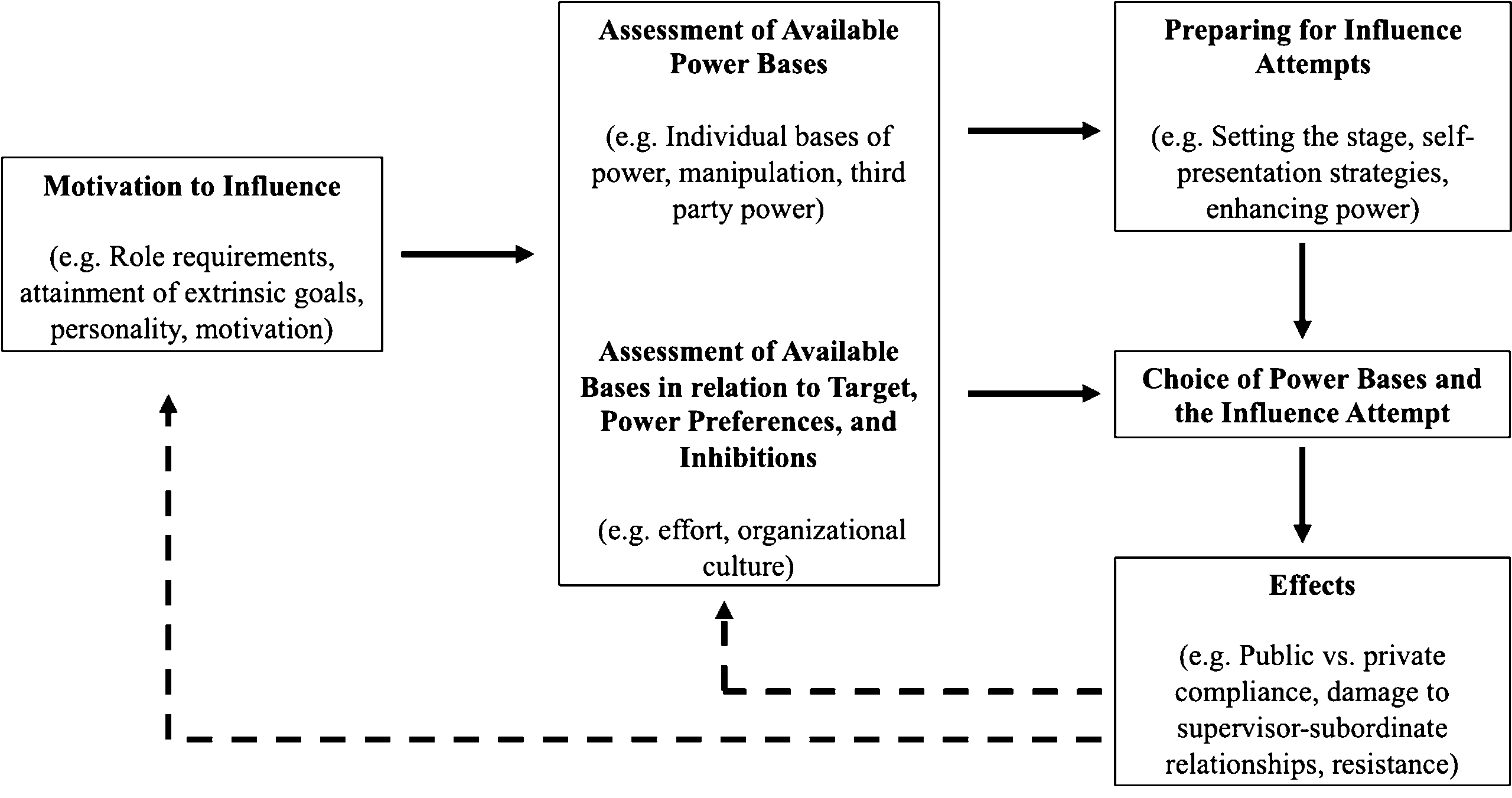
Source: Raven 1992
Jesus’ ministry on Earth provided many examples of how power should be used. Even though He carried divine power within Himself, Jesus “did not count equality with God a thing to be grasped, but emptied himself, by taking the form of a servant, being born in the likeness of men. And being found in human form, He humbled Himself by becoming obedient to the point of death, even death on a cross” (Phil. 2:6–8). This humility turned power and authority on its head, creating a new path towards servant leadership (Greenleaf, 1970). One of the first examples of Jesus using His power in countercultural ways was His first miracle, the turning of water into wine at the wedding in Cana of Galilee. At the wedding, He used His power to provide the best wine that restored respect to the chief steward and preserved hospitality for the guests (John 2:1–11). It was power in the service of human flourishing and to reveal His true identity as the Son of God. Crouch (2013) states that “true power reveals glory, unfolding the abundant possibilities of created things” (p. 110), as He uses the miracle to care for others without taking any of the credit for Himself.
Throughout His earthly ministry, Jesus also used His power with the disciples in countercultural ways. Instead of keeping all His power for Himself, Jesus allowed the healing power of His ministry to be spread across Israel through His disciples. In Luke 9:1–2, it explains how Jesus “called the twelve together and gave them power and authority over all demons and to cure diseases, and He sent them out to proclaim the kingdom of God and to heal.” Washing the disciples’ feet before the Last Supper was another countercultural approach to Jesus’ power (John 13:1–17). This humble act was typically only done by servants, and by Jesus modeling the behavior of a servant, His disciples were challenged to give up their status, to embrace their roles as servant leaders, and use their power for the flourishing of others (Crouch, 2013). After His death and resurrection, where “Jesus lost all power and served, in order to save us” (Keller, 2009, p. 124), Jesus called His disciples and all believers to use the power given to them through the Great Commission to make disciples of all nations (Matt. 28:18–20).
Jesus’ call to serve is reflected in servant leadership theory, conceptualized by Greenleaf (1977) as “leadership behaviors in which leaders persevere to be ‘servant first’ rather than ‘leader first’ and put their subordinates’ highest priority needs before their own” (p. 7). Examples of organizational outcomes from servant leadership are plentiful. Servant leaders have been found to nurture serving cultures through modeling supportive behavior and a desire to serve others (Liden et al., 2014), foster creativity and innovation through showing genuine interest in team member development (Yoshida et al., 2014). In addition, it promotes positive outcomes such as organizational citizen behavior, job commitment, and performance at the individual and team level (Liden et al., 2008).
In summary, God’s use of power in creation and through Jesus’ ministry exemplifies a model of power that is inherently creative, communal, and oriented towards flourishing. This paradigm, characterized by humility and service, challenges conventional notions of authority and compels believers to employ their God-given power to serve their communities.
Shalom and Organizational Practices
The concept of shalom, deeply rooted in biblical teachings, encompasses flourishing in all relationships: with God, ourselves, others, and creation (Sherman, 2022). This section explores how reframing established power models through the lens of shalom can lead to environments where individuals and communities can flourish.
Key Elements of Shalom
The biblical understanding of shalom defines how things should be in three specific realms: material well-being, social relationships, and moral or ethical behavior. Shalom in material well-being aligns with actively pursuing a state of well-being. In social relationships, shalom is displayed through justice and right relationships between people and nations, while the moral pursuit of shalom is centered around promoting honesty, integrity, and straightforwardness (Yoder, 1997). The shalom framework emphasizes that justice is the fruit of these right relationships (Smith et al., 2006), providing liberation for the oppressed and transforming communities from scarcity to sufficiency (Yoder, 1997).
Seeking shalom involves delighting in beauty and creativity, pursuing knowledge and discovery, and finding unity in diversity (Wolterstorff, 1983; Sherman, 2022). Leaders who embody shalom prioritize the flourishing of others and reflect God’s character through their actions (Wolterstorff, 2015; Sherman, 2022). This includes working for justice, relieving suffering, and creating spaces where people can thrive using their unique gifts.
It also means collaborating with others to restore God’s image in the world (Crouch, 2013). Shalom takes shape in business by creating products and services that help the community flourish and by offering meaningful work that affirms human dignity (Van Duzer, 2010). Practices that promote shalom in organizations include empowering the marginalized, engaging in redemptive entrepreneurship, and upholding integrity (Sherman, 2022).
Power/Interaction Model and Shalom
Existing models, including Raven’s Power/Interaction Model, predominantly focus on a secular understanding of power dynamics. While these models are insightful, they overlook the moral and ethical dimensions contributing to a more holistic understanding of power. Just as the Power/Interaction Model has been applied to various contexts to understand job-related outcomes and to evaluate influence mechanisms (Koslowsky et al., 2001; Gupta and Sharma, 2008), this opens the opportunity to reframe the model considering the pursuit of shalom. This process would guide those who desire to use their power to serve others and pursue shalom. In this section and in Table 3, the components of the Power/Interaction Model and the concepts of shalom, and the biblical perspective of power, including stewardship, justice, humility, and the pursuit of the common good (Van Duzer, 2010) will all be considered together.
The first element addresses the motivation to influence, which typically sets the direction towards traditional success measures such as efficiency, productivity, or self-esteem (Raven, 1992). This is the most critical part of the reframing process because the reason behind the influence attempt sets the direction for the rest of the steps. With shalom as the desired outcome, the choice of power base, mode of influence, and preparatory devices (Pereira et al., 2015) can be attuned towards pursuing right relationships and justice (Wolterstorff, 2015).
The next task is to evaluate the available power bases, considering the pursuit of shalom. Using any harsh power bases that would result in fractured relationships, injustice, and the loss of trust would be regarded as too high of a cost (Raven, 1992) and counterproductive when it comes to seeking shalom. However, the original five bases of power theorized by French and Raven (1959) can be reframed through the lens of biblical principles, as summarized in Table 4. Legitimate power can be viewed as a call to stewardship and service, where the needs of others are prioritized in the pursuit of advancing the common good (Greenleaf, 1970). Exercising a shalom-infused approach to legitimate power can also involve promoting justice through making fair decisions and removing barriers to give equal opportunities for employees to contribute and flourish in an organization. Expert power can also be reframed as stewardship, or the responsibility to use expertise generously to care for people and the community, rather than for personal gain (Maramara, 2018).
Impersonal and personal reward power was categorized by Raven et al. (2008) as harsh powers used for transactional control. Instead, reward power can be used to encourage and celebrate practices that align with elements of shalom. Rewarding those who work collaboratively, speak up for injustice, or manage conflict effectively will direct attention towards behaviors that build a flourishing community and a positive organizational culture. On the other end of the spectrum, coercive power, which is often viewed negatively, can be reframed to pursue justice and accountability through enforcing ethical standards that protect the organization’s integrity. Crouch explains, “the legitimate role of coercion is to make room for flourishing, especially by restraining what fundamentally threatens the integrity of God’s creative image bearers” (Crouch, 2013, p. 147).
Referent power is influence that “rests not on rules but on belief in the leader, who earns trust by communicating a vision, articulating goals, and tying the vision and goals to followers’ desired outcomes” (McGinn and Lingo, 2020, p. 16). As the only power embedded in the individual rather than title or procedures, influence attempts must be rooted in personal integrity, character, and consistent ethical behavior.
When looking at the mode of influence and the preparatory activities, there are distinct ways to keep the focus on shalom. In his book, Strong and Weak: Embracing a Life of Love, Risk and True Flourishing, Andy Crouch discusses the need to embrace authority and vulnerability in the pursuit of flourishing. He defines vulnerability as “the willingness to bear burdens and expose ourselves to risks that no one else can fully see or understand” (Crouch, 2016, p. 16) and authority as the “capacity for meaningful action” (Crouch, 2016, p. 26). In the pursuit of vulnerability, leaders often must bear unspoken personal risk and carry the community’s shared concerns. This was reflected in the life of Christ, as He brought full authority to His teaching and healing ministry on Earth while holding the full weight of His impending sacrifice and the implications for the world. Opening to meaningful risk means speaking up against injustice, empowering others to use their authority, and leading to flourishing when authority and vulnerability are brought together (Crouch, 2016). Instead of using impression management to prepare for the influence attempt by controlling perceptions, authenticity can be used to approach the target with transparency, self-disclosure, and trust (Leavy, 2023). Pursuing an active relationship with God can also be a way for the agent to put themselves in the right mindset to keep shalom as the motivating force.
After the influence attempt, the feedback loop should remain a crucial part of the process, evaluating what change has been achieved because of the influence attempt. Considering shalom, this can be through examining whether flourishing in our relationships with God, ourselves, others, and creation has been realized (Sherman, 2022), rather than assessing for compliance, resistance, or damage to the supervisor-subordinate relationship (Raven, 1992). However, this must be put in the context of Isaiah 2:2–4, which describes God’s vision for how things will be when God’s sovereignty and rule are fully realized (Yoder, 1997), saying:“It shall come to pass in the latter days that the mountain of the house of the LORD shall be established as the highest of the mountains, and shall be lifted up above the hills; and the nations shall flow to it, and many peoples shall come, and say: Come, let us go up to the mountain of the LORD, to the house of the God of Jacob, that he may teach us his ways and that we may walk in his paths. For out of Zion shall go forth the law, and the word of the LORD from Jerusalem. He shall judge between the nations and shall decide disputes for many peoples; and they shall beat their swords into plowshares, and their spears into pruning hooks; nation shall not lift up sword against nation, neither shall they learn war anymore.”
Implications for Business Leaders and Future Research
Reframing power dynamics in organizations through the lens of shalom presents profound implications for business leaders, starting with rethinking the motivations behind power use. As stated earlier, traditional models often emphasize achievement or affiliation as primary motivators (McClelland, 1975). However, when shalom is designated as the desired outcome, leaders are encouraged to align their motivations with flourishing in relationships realizing God’s vision for the world (Sherman, 2022), (Yoder, 1997). This alignment transforms the nature of influence from self-serving goals to a service-oriented approach that prioritizes the well-being of others.
In practice, business leaders can implement this reframed perspective by embedding the principles of shalom into their core values and organizational culture. This could involve creating policies and practices that promote fairness, justice, and equal opportunities for all employees. Most organizations have taken steps toward making this a reality, but some have taken a more direct approach. Patagonia has justice and integrity as part of its core values (Patagonia, “Core Values”).
It also has extensive due diligence practices to “promote and sustain fair labor practices, safe working conditions and environmental responsibility” in the finished-goods factories, farms and material suppliers (Patagonia, “Factories, Farms, and Material Suppliers”, para.1), which moved the core value of justice from idea to action. For example, Thistle Farms founded in 1997, uses the profits from its products and café in Nashville to fund programs and uses its platform to advocate for more lasting change (Helmendach, 2025). They run a two-year residential program for survivors of sex trafficking by providing safety, counseling, legal advocacy, and employment. This program is capped at 100 participants and currently has over 100 women on its waitlist, showing the program’s impact and the immense need (Thistle Farms, “Residential Program”). From an advocacy standpoint, they have pursued a variety of initiatives, including partnering with the Tennessee Secretary of State on the Tennessee Businesses against Human Trafficking providing training and resources to businesses across the state (Gallant, 2025).
Table 3 – Power/Interaction Model Integrating Shalom
| Power/Interaction Model | Original Power Model | Shalom Reframed Model |
|---|---|---|
| Motivation to influence | Self-interest (e.g., Need for achievement) |
Pursue collective flourishing (Shalom with God, ourselves, others, and creation) |
| Assessment of available power bases | Use of power as control (e.g., Authority for dominance) |
Use of power as stewardship (e.g., Promote justice) |
| Preparing for influence attempts | Impression Management (e.g., manipulate perceptions) |
Authenticity & vulnerability (e.g., Build trust) |
| Influence attempt | Directive or coercive tactics (e.g., Demand compliance) |
Collaborative & empowering (e.g., Serve & enable others) |
| Outcome focus | Compliance or resistance (Short-term results) |
Holistic well-being (Long-term flourishing) |
Organizations can also operationalize the reframed power bases rooted in integrity, stewardship, authenticity, and justice by developing measures for key shalom-supporting behaviors. These measures could include employee empowerment, transparent and inclusive decision-making, and conflict management. Patagonia is a good example of stakeholder transparency, as it openly shares its supply chain decisions and environmental impact (Patagonia, “Our Footprint”). It uses this information as performance indicators. Buffer identified transparency as one of its values, stating it has shared its compensation strategy and complete list of employee salaries since 2013. In a recent article Buffer’s Founder CEO, Joel Gascoigne stated, “If we are clear on our values and completely committed to living them genuinely, great things happen. This alignment is the foundation for so much of what makes us feel special and allows us to carve our own path as a company and a team” (Gascoigne, 2024, para. 13). However, there are more opportunities to translate shalom-supporting behaviors into key performance indicators, along with development of a holistic assessment that could serve as part of the feedback loop in the model.
Table 4 – Bases of Power Integrating Shalom
| Power Base | Traditional Use of Power | Shalom-Reframed Use of Power |
|---|---|---|
| Legitimate | Authority from formal role; using role to demand compliance and maintain control. | Authority viewed as stewardship; using role to serve others and promote fairness. |
| Expert | Influence through specialized knowledge; guarding expertise to maintain power. | Knowledge seen as a gift to share; using expertise generously to benefit others. |
| Reward | Incentives to ensure compliance; focusing on short-term goals. | Rewards used to celebrate and encourage justice, collaboration, and community-building efforts. |
| Coercive | Threat of punishment to force compliance; creating a culture of fear and resistance. | Applied as just accountability; protecting community by restraining harm. |
| Referent | Garnering influence through charisma; compliance to gain favor. | Influence through a trusted ethical example; inspiring a shared vision of flourishing. |
Limitations and Future Research
While rooted in a Christian theological framework, the applicability of this model may vary across secular or pluralistic organizational contexts. Additionally, organizations operating in highly competitive or bureaucratic industries may find the model’s relational and justice-oriented elements difficult to implement without structural change. There is also a risk of selective interpretation, where theological concepts could be used to justify inappropriate use of power rather than to encourage flourishing.
Further research is needed to assess the model’s adaptability across contexts and to explore how its core principles can be expressed in ways that are accessible to diverse audiences. One avenue would be to apply the reframed Power/Interaction Model to specific organizational processes, such as performance appraisals or employee selection, which can explore how it will influence outcomes and relationships. Another possible direction would be to test the model in various organizational contexts, including nonprofit organizations, faith-based institutions, and workplaces led by Christian leaders, and to examine how values-based leadership impacts power dynamics.
In-depth interviews with Christian business leaders could also illuminate how biblical principles shape their use of power. Researchers can explore what power bases these leaders draw from to build shalom, how they navigate ethical dilemmas, and whether they view legitimate power as a tool to advance the well-being of employees and communities. It would be particularly valuable to examine how leaders articulate the tensions and possibilities of stewarding power in ways that reflect God’s character.
Conclusion
In conclusion, reframing organizational power dynamics through the lens of shalom offers a transformative approach that prioritizes holistic well-being and justice. By aligning power bases and influence methods with biblical principles, leaders can foster environments where individuals and communities flourish, shifting the focus away from traditional measures of success and aligning with a vision of peace, justice, and restoration for all creation.
References
Bui, K.T. and Raven, B.H. (1994). Influence strategies in dating relationships: The effects of relationship satisfaction, gender, and perspective. Journal of Social Behavior and Personality, 9(3), 429-442.
Christensen, G. (2023). Three concepts of power: Foucault, Bourdieu, and Habermas. Power and Education, 0(0), 1-14. https://doi-org.lib-proxy.calvin.edu/10.1177/17577438231187129
Conger, J.A. & Kanungo, R.N. (1994). Charismatic leadership in organizations: Perceived behavioral attributes and their measurement. Journal of Organizational Behavior, 15(5), 439-452.
Crouch, A. (2013). It’s time to talk about power. Christianity Today. https://www.christianitytoday.com/ct/2013/october/andy-crouch-its-time-to-talk-about-power.html
Crouch, A. (2013). Playing God: Redeeming the gift of power. Downers Grove, Illinois: IVP Books.
Crouch, A. (2016). Strong and weak: Embracing a life of love, risk and true flourishing. Downers Grove, IL: InterVarsity Press.
DeCelles, K.A. & Pfarrer, M.D. (2004). Heroes or villains? Corruption and the charismatic leader. Journal of Leadership & Organizational Studies, 11(1), 67-77. 10.1177/107179190401100108
Elias, S. (2008). Fifty years of influence in the workplace: The evolution of the French and Raven power taxonomy. Journal of Management History, 14(3), 267-283. 10.1108/17511340810880634
Elias, S. (2009). Restrictive versus promotive control and employee work outcomes: The moderating role of locus of control. Journal of Management, 35(2), 369-392. 10.1177/0149206308318620
English Standard Version Bible. (2001). Crossway.
French, J.R.P. Jr. & Raven, B.H. (1959). The bases of social power. In D. Cartwright (Ed.), Studies in social power, 150-167. Ann Arbor: University of Michigan.
Gallant, J. (2025, February 20). 250 businesses have signed up for anti-trafficking program in Tenn. https://www.actionnews5.com/2025/02/20/250-businesses-have-signed-up-antitrafficking-program-tenn/
Gascoigne, J. (2024). Introducing our open salary system: Reflecting on a decade of transparent salaries at Buffer. https://buffer.com/resources/salary-system/
Gupta, B. & Sharma, N.K. (2008). Compliance with bases of power and subordinates’ perception of superiors: Moderating effect of quality of interaction. Singapore Management Review, 30(1), 1-24.
Greenleaf, R.K. (1970). The servant as leader. Newton Center, MA: Robert K. Greenleaf Center.
Helmendach, A. (2025). Tennessee transplant: Thistle farms and the woman behind the enterprise. ET Online. https://easttennessean.com/2025/02/05/tennessee-transplant-thistle-farms-and-the-woman-behind-the-enterprise/
Hyde, J.K. (2010). Concepts of power in Kierkegaard and Nietzsche. Surrey, England: Ashgate Publishing.
Keller, T. 2009. Counterfeit Gods. New York, NY: Dutton.
Keltner, D. (2016). Don’t let power corrupt you. Harvard Business Review, 108-111. https://hbr.org/2016/10/dont-let-power-corrupt-you
Kipnis, D, Schmidt, S.M., & Wilkinson, I. (1980). Intraorganizational influence tactics: Explorations in getting one’s way. Journal of Applied Psychology 65(4), 440-452. 10.1037/0021-9010.65.4.440
Langhof, J.G. & Güldenberg, S. (2020). Servant leadership: A systematic literature review toward a model of antecedents and outcomes. German Journal of Human Resource Management, 34(1), 32-68. https://doi.org/10.1177/2397002219869903
Leavy, B. (2023). Bill George: Guiding two decades of the authentic leadership movement. Strategy & Leadership, 51(3), 3-9. 10.1108/SL-02-2023-0022
Liden, R.C., Wayne, S.J., Liao, C., & Meuser, J.D. (2014). Servant leadership and serving culture: Influence on individual and unit performance. Academy of Management Journal, 57(5), 1434-1452. http://dx.doi.org/10.5465/amj.2013.0034
Liden, R.C., Wayne, S.J., Zhao, H., & Henderson, D. (2008). Servant leadership: Development of a multidimensional measure and multi-level assessment. The Leadership Quarterly, 19(2), 161-177. https://doi.org/10.1016/j.lequa.2008.01.006
Lingo, E.L. & McGinn, K.L. (2020). A new prescription for power. Harvard Business Review. https://hbr.org/2020/07/a-new-prescription-for-power
Linthicum, R. (2003). Transforming power: Biblical strategies for making a difference in your community. Downers Grove, IL: IVP.
Machiavelli, N. 1532. The prince (G. Bull, Trans. 1961). London, UK: Penguin Classics.
Maramara, Z. (2018). Shalom leadership. Christian Leadership Alliance. https://christianleadershipalliance.org/blog/2018/07/11/shalom-leadership-by-zenet-maramara/
McClelland, D.C. (1975). Power: The inner experience. New York, NY: Irvington Publishers, Inc.
McClelland, D.C. & Burnham, D.H. (2003). Power is the great motivator. Harvard Business Review, https://hbr.org/2003/01/power-is-the-great-motivator
Messarra, L.C., Karkoulian, S., & Sidani, M. (2009). Correlates of the bases of power and the big five personality traits: An empirical investigation. Journal of Organizational Culture, Communications and Conflict, 13(2). http://hdl.handle.net/10725/3756
Muralidharan, E. & Pathak, S. (2018). Sustainability, transformational leadership, and social entrepreneurship. Sustainability, 10, 567-578. 10.3390/su10020567
Oikonomia Network. (2013). Willard on Wisdom. https://oikonomianetwork.org/2013/04/willard-on-
Patagonia. (n.d.). Core values. https://www.patagonia.com/core-values/
Patagonia. (n.d.). Factories, farms and material suppliers. https://www.patagonia.com/factories-farms-material-suppliers/
Patagonia. (n.d.). Our footprint. https://www.patagonia.com/our-footprint/
Pelz, D.C. (1952). Influence: A key to effective leadership in the first-line supervisor. Personnel, 29, 209-217.
Pfeffer, J. (2022). 7 rules of power: Surprising – but true – advice on how to get things done and advance your career. Dallas, TX: BenBella Books.
Raven, B.H. (1965). Social influence and power, In Steiner, D. & Fishbein, M. (Eds)., Current studies in psychology, New York, NY: Holt, Rinehart and Winston.
Raven, B.H. (1992). A power/interaction model of interpersonal influence: French and Raven thirty years later. Journal of Social Behavior and Personality, 7, 217-244.
Raven, B.H. (1999). Kurt Lewin address: Influence, power, religion, and the mechanisms of social control. Journal of Social Issues, 55(1), 161-186.
Raven, B.H. (2008). The bases of power and the power/interaction model of interpersonal influence. Analyses of Social Issues and Public Policy, 8(1), 1-22.
Raven, B.H., Schwarzwald, J., & Koslowsky, M. (1998). Conceptualizing and measuring a power/interaction model of interpersonal influence. Journal of Applied Social Psychology, 28(4), 307-332.
Salancik, G.R. & Pfeffer, J. (1977). Who gets power – and how they hold onto it: A strategic contingency model of power. Organizational Dynamics, 3-21.
Sherman, A.L. (2022). Agents of flourishing. Downers Grove, IL: IVP.
Smith, T.M., Steen, T.P., VanderVeen, S. (2006). Doing “good” and doing “well”: Shalom in Christian business education. Christian Business Academy Review, 113-121. https://doi.org/10.69492/cbar.v1i1.12
Stogdill, R.M. (1950). Leadership, membership, and organization. Psychological Bulletin, 47(1): 1-14. https://doi.org/10.1037/h0053857
Thistle Farms (n.d.). Residential programs. https://thistlefarms.org/pages/residential-program
Weber, M. (1947). The theory of social and economic organization (A.M. Henderson & T. Parsons, Trans.). New York: Oxford University Press.
Wolters, A.M. (2005). Creation Regained: Biblical basis for a Reformational worldview. Grand Rapids, MI: William B. Eerdmans Publishing Company.
Wolterstorff, N. (1983). Until justice and peace embrace. Grand Rapids, MI: William B. Eerdmans Publishing Company.
Wolterstorff, N. (2015). Justice in love. Grand Rapids, MI: William B. Eerdmans Publishing Company.
Yoder, P.B. (1997). Shalom: The Bible’s word for salvation, justice, and peace. Eugene, Oregon: WIPF & Stock.
Yoshida, D.T., Sendjaya, S., Hirst, G., and Cooper, B. (2014). Does servant leadership foster creativity and innovation? A multi-level mediation study of identification and prototypicality. Journal of Business Research, 67(7), 1395-1404. https://doi.org/10.1016/j.jbusres.2013.08/013
Yukl, G. and Tracey, J.B. (1992). Consequences of influence tactics used with subordinates, peers, and the boss. Journal of Applied Psychology, 77, 525-535. https://doi.org/10.1037/0021-9010.77.4.525